Choosing the Best Battery Capacity for Solar Lighting Solutions?

Time:2026-05-01 Author:Oliver
0%

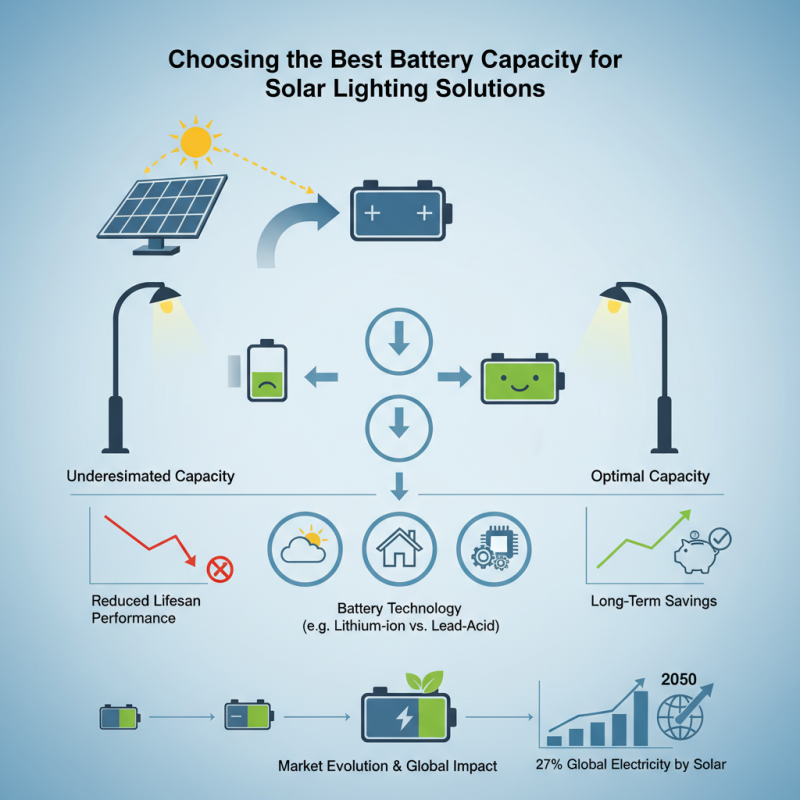
Choosing the right battery capacity for solar lighting solutions is essential for efficiency and longevity. The International Energy Agency reports that solar energy could provide up to 27% of global electricity by 2050. Effective solar lighting designs depend heavily on accurate battery specifications. Understanding how to choose the right battery capacity for solar lighting helps ensure systems perform optimally.

A common error is underestimating battery capacity requirements. Recent studies indicate that many users opt for smaller batteries to cut costs. This compromises performance, especially in areas with limited sunlight. To avoid this pitfall, users should evaluate local conditions and energy needs. Data from the Solar Energy Industries Association suggests that optimal battery performance can double the lifespan of solar lighting installations.

Another factor is the technology used in batteries. Lithium-ion batteries, for instance, offer a higher energy density compared to lead-acid batteries. However, they may come with higher initial costs. It’s critical to weigh these factors against long-term savings. As the market evolves, having the right information about how to choose the right battery capacity for solar lighting becomes increasingly vital.
Choosing the Best Battery Capacity for Solar Lighting Solutions?

Understanding Solar Lighting Solutions and Their Power Needs

Understanding solar lighting solutions requires insight into their power needs. Solar lights depend on batteries to store energy for nighttime use. The capacity of these batteries significantly impacts performance. A typical solar lighting setup utilizes batteries with a capacity ranging from 20Ah to 120Ah, depending on the design and purpose.

When determining the right battery capacity, consider the average power consumption of your lights. For instance, if your lights use 10 watts and run for 8 hours, you require 80 watt-hours of capacity. Using the formula, this means a battery with at least 10Ah capacity at 12V. However, experts recommend adding a buffer for cloudy days and battery aging, increasing capacity to 15Ah or more.

Tips: Always check battery specifications. Higher capacity batteries may offer longer lighting durations but can be more costly. Also, consider the climate—regions with less sunlight may need more robust battery systems to ensure reliability. By assessing power needs and local conditions, you can make informed choices that enhance performance. Rising energy costs emphasize the importance of optimizing solar lighting solutions for efficiency.

Key Factors Influencing Battery Capacity Selection for Solar Systems

Choosing the right battery capacity for solar lighting is essential. Several factors influence this decision. Understanding your energy needs is crucial. Calculate the total wattage of your lights and how long you intend to use them each night.

The location and climate significantly impact battery capacity. For instance, areas with shorter daylight hours may require larger batteries. Additionally, temperatures affect battery performance. Cold climates can reduce efficiency, leading to inadequate power supply.

Consider the depth of discharge (DoD) as well. Higher DoD allows you to use more of the battery's capacity. This means you'll need a smaller battery for the same usage duration. However, pushing a battery to its limits shortens its lifespan. Thus, balance is necessary. Reflect on your actual usage patterns. Monitor how often you need to recharge. This data can help you make informed choices.

Comparing Different Battery Types for Solar Lighting Applications

When selecting batteries for solar lighting solutions, different types serve various needs. Lead-acid batteries are common due to their cost-effectiveness. However, they tend to have a shorter lifespan compared to alternatives. Users may find themselves replacing them more frequently.

Lithium-ion batteries offer a longer lifespan and higher efficiency. They can discharge deeper without damage. This is an appealing feature for areas with extended periods of low sunlight. On the downside, lithium-ion options can be pricier and may not always present the best initial investment for every user.

Lastly, NiMH batteries stand in the middle ground. They represent a good balance between lead-acid and lithium-ion in terms of cost and performance. However, their energy density is lower. Users might notice a drop in performance over time. Evaluating the specific requirements and budget is essential in making the right choice. Each type has its pros and cons, and sometimes the choices can feel overwhelming.

Choosing the Best Battery Capacity for Solar Lighting Solutions

Battery Type Nominal Voltage (V) Capacity (Ah) Cycle Life Weight (kg) Cost ($)
Lithium-ion 3.7 20 2000 0.5 150
Lead Acid 12 40 500 12 50
Nickel-Cadmium 1.2 10 1000 0.4 70
Sodium-Nickel Chloride 6 30 3000 9 120

Calculating Required Battery Capacity for Optimal Performance

When assessing solar lighting solutions, calculating the required battery capacity is crucial. It ensures that the system can provide optimal performance. Start by determining the total energy needs of your lights. Each light has a specific wattage. Multiply wattage by daily hours of usage. This gives you the total watt-hours needed per day.

Next, consider the battery's efficiency. Not all energy stored can be used. Budget for losses, typically around 20%. If your total need is 100 watt-hours, you'll require at least 120 watt-hours from your battery. Factor in how many cloudy days to prepare for. This affects the overall capacity required for your battery system.

Selecting a battery with a longer lifespan is also essential. Higher capacity batteries tend to have a better cycle life, but the upfront cost can be higher. Reflect on whether you need to compromise on battery size and longevity. It’s a balancing act between cost, capacity, and performance. Evaluate your choices carefully and consider future energy needs.

Maintenance Tips for Prolonging Battery Life in Solar Lighting Systems

Battery maintenance is crucial for optimal performance in solar lighting systems. According to a report by the National Renewable Energy Laboratory (NREL), proper care can extend battery life by 20-30%. Regular monitoring of battery health helps in addressing potential issues early.

One effective tip is to keep batteries clean and free from corrosion. Dirt can affect the connection and reduce efficiency. Another important aspect is maintaining the right charging conditions. Overcharging or undercharging can lead to significant battery damage. Monitoring the temperature is also essential. Batteries should be kept in environments that do not exceed recommended temperature ranges.

Investing in higher-quality batteries may yield better long-term results. However, many users opt for cheaper alternatives, risking early failure. Educating oneself about battery characteristics is essential. Different battery types have varying lifespans and discharge rates. A clear understanding can optimize battery selection for specific solar lighting needs.

Battery Capacity vs. Lifespan in Solar Lighting Systems

This chart illustrates the relationship between battery capacity and the average lifespan of batteries used in solar lighting systems. Larger capacity batteries tend to last longer, extending the usability of solar solutions.

FAQS

: What is the importance of battery capacity in solar lighting solutions?

: Battery capacity significantly impacts performance. It determines how long lights can run at night.

How do I calculate the required battery capacity for my solar lights?

Check your lights' power consumption. For 10 watts running 8 hours, a battery should have at least 10Ah capacity.

Why should I consider a buffer when determining battery size?

A buffer accounts for cloudy days and battery aging. Increasing capacity to 15Ah or more is often recommended.

What types of batteries are best for solar lighting?

Lead-acid batteries are cost-effective, while lithium-ion offers longer life. NiMH stands between both options.

What is a significant drawback of lead-acid batteries?

They have a shorter lifespan and require more frequent replacements, which can be inconvenient for users.

How can I maintain my solar lighting batteries?

Keep them clean and monitor charging conditions. Overcharging or undercharging can lead to damage.

What can happen if I don’t monitor battery health regularly?

Ignoring battery health can lead to early failure. Early detection of issues can extend battery life significantly.

Are cheaper batteries always the best choice?

Cheaper batteries might fail earlier. Investing in quality options may provide better long-term results.

How does temperature affect battery performance?

Batteries should be kept within recommended temperature ranges. Extreme temperatures can reduce efficiency and lifespan.

Why is understanding battery characteristics essential for users?

Different batteries have varying lifespans and discharge rates. Knowing these can optimize selections for your needs.

Conclusion

When exploring how to choose the right battery capacity for solar lighting, it is essential to understand the specific power needs of solar lighting solutions. Factors such as the duration of use, the brightness required, and environmental conditions can significantly influence battery capacity selection. Various battery types, including lithium-ion and lead-acid, offer different advantages in terms of lifespan, efficiency, and cost-effectiveness.

To ensure optimal performance, it’s crucial to calculate the required battery capacity based on the energy consumption of the lighting system. Additionally, proper maintenance tips can prolong battery life and enhance the reliability of solar lighting systems. By carefully considering these factors, users can select the appropriate battery capacity that meets their solar lighting needs effectively.

Oliver

Oliver

Oliver is a seasoned marketing professional with a wealth of expertise in driving brand awareness and engagement. With a deep understanding of our company's product offerings, he consistently delivers high-quality content that enriches our professional blog. His insights not only shed light on......