Winter can expose weaknesses in solar street lights that remain hidden during mild seasons. Snow may cover the photovoltaic panel, batteries lose usable capacity, and freezing temperatures can make cables and seals brittle. A lamp that worked reliably in autumn may dim before dawn in January. Small details matter.
This guide explains How to maintain solar street lights in extreme cold weather through practical inspection and servicing methods. Experienced maintenance teams should check panel surfaces, battery voltage, controller settings, cable joints, and pole foundations. Remove snow with a soft brush, not sharp tools that could scratch the glass. Inspect battery enclosures for moisture, corrosion, and damaged insulation. Confirm that the panel receives direct sunlight during the shortest winter days. Record nighttime operating hours after each service visit.
Cold-weather maintenance also requires careful planning. Lithium batteries may need low-temperature charging protection, while some lead-acid batteries require different monitoring procedures. Always follow the manufacturer’s specifications and use trained technicians for electrical testing. A thermal camera can reveal abnormal connections, but simple visual checks still catch many failures. Keep spare fuses, connectors, and approved fasteners available near remote sites.
No checklist is perfect. Local wind, snow depth, shading, and installation quality can change the result. I have seen clean panels fail because a nearby branch blocked afternoon sunlight. That mistake was easy to miss. Reliable maintenance combines measured data with field judgment, seasonal records, and honest review after every failure. This approach helps street lights remain safer, brighter, and more dependable when communities need them most.
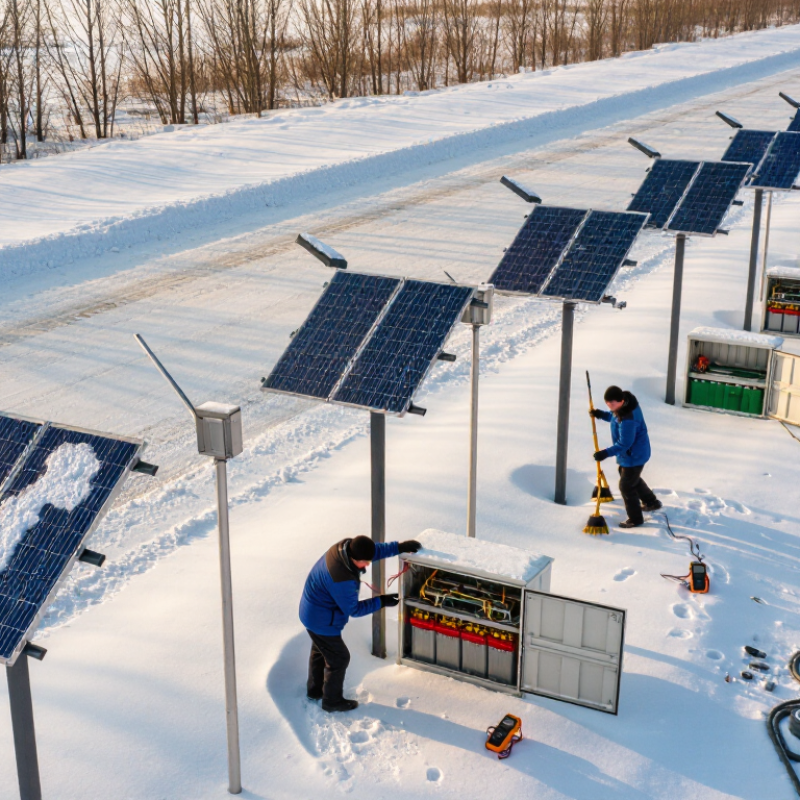
Extreme cold changes how solar street lights generate, store, and deliver energy. Photovoltaic panels can produce higher voltage in low temperatures. NREL’s PVWatts documentation uses a crystalline-silicon temperature coefficient near -0.4% per °C. Therefore, a panel at -10°C may perform better electrically than one at 25°C. However, winter sunlight remains weaker, and snow can block the glass completely. IEA PVPS Task 13 reports that snow-related annual losses vary widely by climate, tilt, and clearing conditions. That variation matters.
The battery is usually the weak point. The U.S. Department of Energy’s Energy Storage Handbook explains that low temperatures slow electrochemical reactions and reduce usable capacity. Lithium batteries should not receive normal charging below freezing unless their protection system allows it. Charging at 0°C can cause lithium plating and permanent damage. Lead-acid batteries also deliver less capacity in cold weather. A lamp may appear fully charged at dusk, then shut down before dawn. This is common.
Keep the battery enclosure dry, insulated, and ventilated. Do not seal moisture inside. Check the controller’s low-temperature charging limits before winter begins. Inspect terminals for condensation, frost, and corrosion. Clear snow from the panel after heavy storms, but avoid scraping frozen ice across the glass. Measure morning battery voltage and nighttime runtime together; voltage alone can mislead. Field teams often replace a battery too quickly. The real fault may be snow shading, a damaged temperature sensor, or a controller with poor cold-weather settings. Some designs still underestimate wind chill around exposed poles.
| System Component | Effect of Extreme Cold | Typical Temperature or Condition | Recommended Maintenance Action | Suggested Inspection Frequency |
|---|---|---|---|---|
| Lithium-ion battery | Charging performance decreases at low temperatures. Charging below the battery manufacturer’s approved limit can cause permanent damage or create a safety risk. | Many lithium-ion batteries require charging above 0°C, although the exact limit depends on the cell chemistry and battery-management system. | Use a battery-management system with low-temperature charge protection. Keep the battery within the specified operating range and never bypass the protection system. | Check before winter and after prolonged freezing conditions. |
| Lead-acid battery | Cold temperatures reduce available capacity and increase the risk of freezing when the battery is deeply discharged. | Capacity commonly falls as temperature drops below 25°C; a severely discharged electrolyte can freeze near or above −20°C. | Prevent deep discharge, inspect the enclosure for water intrusion, and follow the battery manufacturer’s charging and electrolyte requirements. | Inspect monthly during winter in areas with frequent freezing temperatures. |
| Solar photovoltaic panel | Cold generally improves photovoltaic voltage, but snow, frost, ice, and short winter daylight hours can significantly reduce energy collection. | Snow cover can reduce received sunlight to near zero until the panel is cleared or the snow slides off. | Remove snow and ice with a soft, non-abrasive tool. Do not scrape the glass with metal objects or pour hot water on a frozen panel. | Inspect after every major snowfall or ice storm. |
| Panel mounting structure | Snow and ice add weight, while freeze-thaw cycles can loosen fasteners, damage seals, or shift the panel angle. | Risk increases where snow accumulation is heavy or temperatures repeatedly cross 0°C. | Check fasteners, brackets, welds, and tilt angle. Remove accumulated snow according to the structure’s load limits. | Inspect at the start of winter and after severe weather. |
| LED light source | LEDs usually operate efficiently in cold weather, but thermal contraction, moisture, or driver limitations may cause flickering or failure. | Performance depends on the luminaire and driver’s rated operating range. | Verify the luminaire and driver are rated for the local minimum temperature. Inspect for condensation, cracked lenses, and loose connections. | Inspect every 3–6 months and after abnormal lighting behavior. |
| Charge controller | Incorrect temperature compensation or charging at unsuitable temperatures can reduce battery life and cause charging faults. | The correct settings vary by battery chemistry and controller design. | Confirm battery chemistry, temperature-sensor operation, fault records, and low-temperature charging settings. | Review settings before winter and check fault logs during routine service. |
| Cables and connectors | Cold can make cable insulation and connector seals less flexible. Moisture entering a connector may freeze and interrupt the circuit. | Risk is higher during repeated freeze-thaw cycles and when connectors are exposed to precipitation. | Inspect for cracked insulation, corrosion, loose terminals, and water entry. Keep connectors sealed and strain-relieved. | Inspect twice during winter and whenever intermittent faults occur. |
| Light-control settings | Long winter nights increase operating hours, which can use more stored energy than the system collects during short or cloudy days. | Energy demand rises as nighttime duration increases and solar irradiation decreases. | Use adaptive dimming or motion-based lighting where appropriate, while maintaining required safety illumination levels. | Review seasonal settings before winter and monitor overnight runtime. |
| Enclosure and ventilation | Poor sealing allows snowmelt and condensation to enter. Sealed batteries may also require suitable pressure-management provisions specified by the manufacturer. | Condensation is common when equipment changes rapidly between cold outdoor air and warmer internal conditions. | Check gaskets, drainage paths, cable glands, and ventilation components. Remove standing water and replace damaged seals. | Inspect every 3–6 months and after thawing events. |
| Performance monitoring | Reduced nighttime runtime, slow charging, or repeated controller faults may indicate insufficient solar input, battery degradation, or cold-related protection. | A noticeable decline compared with the system’s normal seasonal performance requires investigation. | Record panel voltage, battery voltage, charging current, operating hours, and fault codes when safe and supported by the equipment design. | Monitor weekly during severe winter weather and compare results with historical data. |
Note: Temperature limits, charging requirements, and maintenance intervals vary by battery chemistry and equipment design. Always follow the applicable manufacturer specifications and local electrical-safety requirements.
Cold can increase panel voltage and electrical efficiency. However, weak winter sunlight still limits total energy. Snow may cover the glass completely. Small temperature gains cannot overcome heavy shading.
Cold slows battery reactions and reduces usable capacity. A lamp may show full power at dusk, then stop before dawn. This happens often. Battery voltage alone can mislead.
Only if the protection system specifically allows it. Charging below freezing can cause permanent internal damage. Check the charging limits before winter. Guessing here is risky.
Keep it dry, insulated, and ventilated. Do not trap moisture inside the enclosure. Inspect frost, condensation, cracks, and corrosion. A tiny seal opening can admit melting snow.
Use an astronomical controller when available. Keep early evening lighting strong for pedestrians and traffic. After midnight, reduce output to 60–70% if safety rules allow. Recheck the schedule after storms.
Inspect the system weekly during severe cold. Record noon panel voltage, pre-dawn battery voltage, and operating hours. These details reveal patterns. A quick visual check may miss hidden condensation.
Isolate the system before maintenance. Wear insulated gloves, eye protection, and non-slip footwear. Use a soft brush for loose snow. Never scrape frozen ice across the glass. Avoid icy ladders.
Confirm direct winter sunlight reaches the panel. Inspect snowbanks, branches, and nearby construction. Test the controller, LED connection, and dusk sensor separately. Record every reset and result. Repeated resets can hide the real fault.
Maintaining solar street lights in extreme cold weather requires a careful approach to battery performance, energy collection, and physical protection. Low temperatures can reduce battery capacity, shorten operating time, and affect charging efficiency, while snow and ice may block solar panels or add stress to fixtures and mounting structures. Regular inspections should cover battery condition, panel cleanliness, wiring connections, seals, poles, and LED light fixtures. Remove snow gently, prevent moisture from entering electrical compartments, and check for cracks, corrosion, or loose components after freezing conditions.
To improve reliability during short winter days, adjust lighting schedules, brightness levels, or motion-sensing settings when appropriate to conserve stored energy. Maintenance should be performed safely by turning off relevant power connections, using suitable protective equipment, and avoiding work during severe weather. A practical troubleshooting check should confirm that panels receive adequate sunlight, batteries charge correctly, wiring remains secure, and lights operate according to schedule. These steps explain how to maintain solar street lights in extreme cold weather while supporting consistent illumination throughout winter.

 Lumina Light