Street lighting is crucial for urban safety and aesthetics. When selecting solar panels for street lights, many face a critical decision. The choice between monocrystalline and polycrystalline panels can significantly impact efficiency, cost, and longevity.
Why choose monocrystalline over polycrystalline for street lights? Monocrystalline panels are known for their high efficiency and space-saving design. They perform better in low light conditions, making them ideal for urban environments. These advantages lead to reduced energy costs and lower maintenance needs.
However, polycrystalline panels also have their merits. They typically come at a lower price point, which can be appealing for budget-conscious projects. Yet, the long-term advantages of monocrystalline technology often outweigh these initial savings. Investing in higher-quality panels can lead to greater reliability and performance in the long run. Each choice has its trade-offs, and evaluating them carefully can lead to smarter decisions in street lighting solutions.
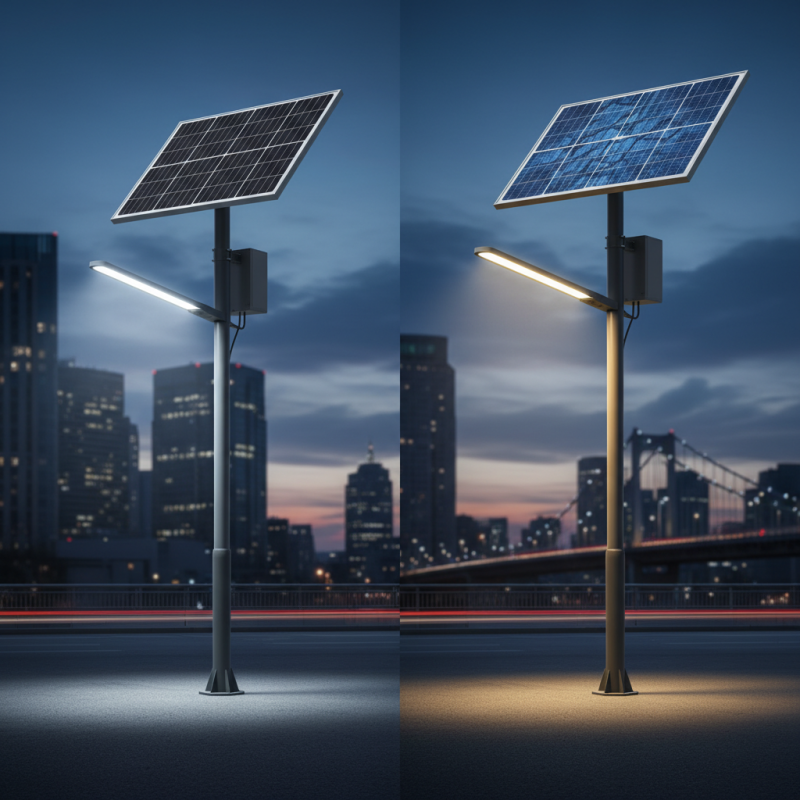
When it comes to street lighting, monocrystalline solar panels stand out for several reasons. They are known for their high efficiency. These panels convert more sunlight into electricity compared to polycrystalline options. This means that monocrystalline lights can operate effectively even in low light conditions. For urban areas with limited space, this efficiency is crucial. They require fewer panels to achieve the same output.
Durability is another important factor. Monocrystalline panels are built to last longer than their counterparts. They are often designed to withstand harsh weather conditions. This reliability ensures that street lights can function consistently over time. The initial investment may be higher, but the long-term savings in maintenance and replacements can be significant.
Some may argue that polycrystalline panels are more affordable, but cheaper does not always mean better. Monocrystalline technology offers superior performance and longevity. In the long run, monocrystalline panels can reduce costs associated with energy and maintenance. It’s essential to weigh both efficiency and durability when choosing the right solar technology for street lighting. Consider the overall impact on sustainability and community well-being too.
| Feature | Monocrystalline | Polycrystalline | Notes |
|---|---|---|---|
| Efficiency | 15% - 22% | 13% - 17% | Higher efficiency leads to more energy production. |
| Space Requirement | Less space needed | More space needed | Ideal for areas with limited installation space. |
| Longevity | 25+ years | 20-25 years | Longer lifespan reduces the need for replacements. |
| Performance in Low Light | Better performance | Standard performance | More suitable for cloudy days and dawn/dusk. |
| Aesthetic Appeal | Sleek appearance | Less uniform | Monocrystalline panels often look more modern. |
| Cost | Higher initial cost | Lower initial cost | Higher efficiency may lead to lower long-term costs. |
: They offer long-term savings through higher efficiency and durability compared to other types.
They last about 25 to 30 years, which is longer than many alternatives.
Yes, they maintain efficiency better in cloudy or shaded areas, making them ideal for street lighting.
They feature sleek designs that enhance urban landscapes and complement modern architecture.
Thoughtful lighting design can create inviting gathering places and reduce visual clutter.
Yes, their long-term energy savings and lower maintenance costs can outweigh upfront expenses.
Consider how lights fit into the overall area design and the colors that harmonize with the environment.
Varying the heights of installations can create a more appealing visual dynamic.
Yes, investing in these panels supports sustainable energy while also reducing expenses.
Select fixtures that complement nearby structures and ensure proper positioning for maximum appeal.
The article "Why Choose Monocrystalline for Street Lights Over Polycrystalline?" highlights the numerous advantages of using monocrystalline solar panels in street lighting applications. One of the key reasons to choose monocrystalline over polycrystalline for street lights is their superior efficiency, which allows for greater energy production even in limited space and lower light conditions. Additionally, monocrystalline panels typically have a longer lifespan and higher durability, making them more suitable for outdoor environments that are subject to various weather conditions.
Cost-effectiveness is another significant factor; while the initial investment may be higher, the long-term savings from reduced energy costs and maintenance can be substantial. Furthermore, monocrystalline street lights often offer a sleek aesthetic appeal, which can enhance the visual design of public spaces. Overall, the combination of efficiency, durability, cost savings, and aesthetics makes a compelling case for why choose monocrystalline over polycrystalline for street lights.

 Lumina Light