Solar LED lighting combines photovoltaic panels, rechargeable batteries, LED fixtures, and smart controls. During daylight, the panel converts sunlight into electricity and stores it in the battery. After sunset, the stored energy powers the lamp, often through motion or dimming controls.
This design can reduce dependence on grid electricity and diesel generators. It also supports lighting in rural roads, parks, pathways, and emergency areas without continuous underground cabling. So, what are the environmental benefits of solar LED street lighting? Lower operational emissions, reduced energy consumption, and fewer fuel deliveries are important answers. LEDs also produce more light per watt than many older lamps. Their focused beams can improve visibility while limiting unnecessary upward light.
The environmental picture is not perfectly green. Solar panels, batteries, poles, and electronic components require raw materials and manufacturing energy. Batteries eventually need safe replacement and responsible recycling. Dust can reduce panel output, while cloudy weather may shorten nighttime lighting. A poorly designed system can create waste or unreliable service.
Good planning matters. Engineers should assess local sunlight, traffic patterns, drainage, battery temperature, and lighting levels before installation. Regular cleaning and performance checks can extend system life. In practical terms, a well-positioned lamp may illuminate a footpath while leaving nearby trees darker. That small detail can protect nocturnal habitats and reduce glare.
Solar LED lighting offers measurable environmental advantages, but results depend on design, maintenance, and end-of-life management. Its value comes from thoughtful application, not technology alone.
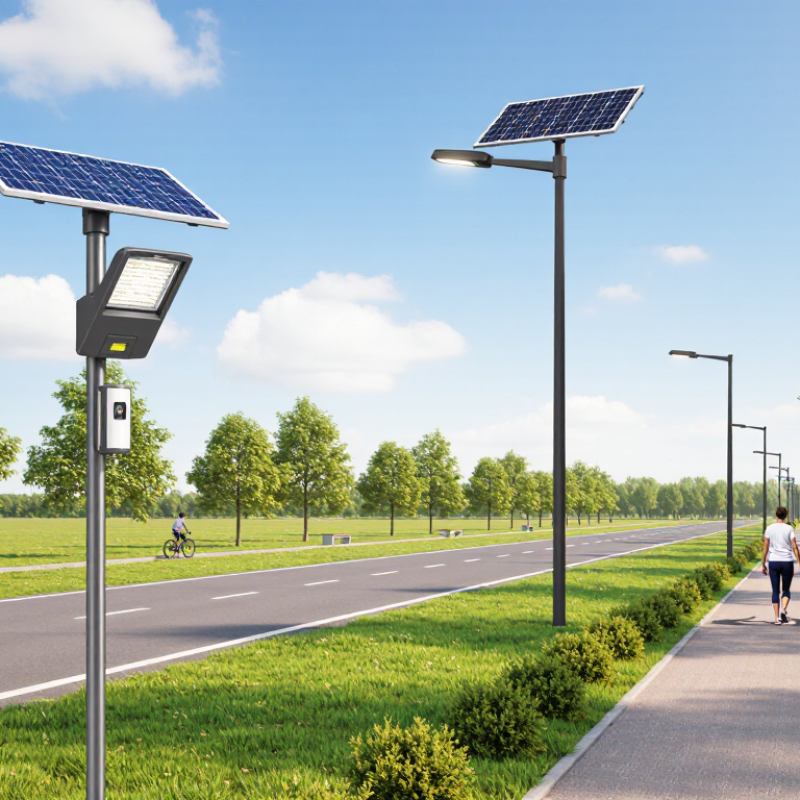
Solar LED lighting combines photovoltaic power with efficient light-emitting diodes. A small solar panel converts sunlight into electricity during the day. A charge controller regulates that energy. The battery stores it for nighttime operation. An LED module then produces focused light with low power demand. Simple in appearance, but carefully balanced.
Core performance depends on four technologies: panel efficiency, battery chemistry, LED efficacy, and intelligent control. A light sensor can trigger operation at dusk, while motion detection reduces unnecessary output. The U.S. Department of Energy reports that LED lighting can use at least 75% less energy than incandescent lighting. Its data also indicates a much longer service life. In practice, poor sizing can weaken those gains. Shade, dust, and short winter days matter.
The environmental case is significant. The International Energy Agency has reported that lighting historically consumed about 15% of global electricity and produced roughly 5% of energy-related greenhouse gas emissions. Solar LED systems reduce grid demand and avoid routine trenching for power cables. Yet they are not impact-free. Batteries require materials, replacement planning, and responsible recycling. That part is often overlooked. Field inspections have shown that a clean panel and correctly sealed battery enclosure can matter as much as advertised specifications. Performance should be measured after rainy months, not only on installation day.
| Category | Element or Dimension | Definition or Typical Data | Core Technology | Environmental Benefit |
|---|---|---|---|---|
| Definition | Solar LED lighting | An outdoor lighting system that converts sunlight into electricity, stores the energy, and uses it to power light-emitting diodes after dark. | Photovoltaic generation, battery storage, LED illumination, and automatic control. | Can provide lighting without a continuous connection to the electricity grid and can reduce dependence on fossil-fuel-based electricity. |
| Energy Source | Solar photovoltaic panel | Captures sunlight and converts it into direct-current electricity. Crystalline-silicon modules are widely used in outdoor systems. | Photovoltaic effect in semiconductor cells. | Produces electricity during operation without direct combustion emissions, fuel consumption, or local air pollution. |
| Energy Storage | Rechargeable battery | Stores daytime solar energy for nighttime operation. Common chemistries include lithium-based and lead-acid batteries. | Electrochemical energy storage with a charge-discharge cycle. | Supports lighting when sunlight is unavailable and helps avoid the need for a dedicated grid connection. Battery recycling and responsible disposal are important. |
| Light Source | LED module | Uses semiconductor devices to produce light when electric current passes through them. LEDs generally consume less electricity than incandescent lamps for the same light output. | Electroluminescence and solid-state lighting. | Lower electricity demand can reduce lifecycle greenhouse-gas emissions, especially where grid electricity has a high carbon intensity. |
| Efficiency | Luminous efficacy | Modern LED systems commonly deliver approximately 80–160 lumens per watt at the system or source level, depending on design, optics, temperature, and operating conditions. | High-efficiency LED chips, drivers, lenses, and thermal management. | More light can be produced from less stored energy, allowing smaller solar panels or batteries for a comparable lighting requirement. |
| Control System | Charge controller and lighting controller | Regulates battery charging, protects against overcharging and deep discharge, and controls the lighting schedule. | Pulse-width modulation or maximum-power-point-tracking control, combined with programmed switching. | Improves energy utilization and battery life, which can reduce replacement frequency and material consumption. |
| Automatic Operation | Photocell and timer | A photocell detects ambient light, while a timer or programmable controller determines when the lamp turns on, dims, or turns off. | Light sensing, astronomical timing, and programmable dimming. | Prevents unnecessary daytime operation and can reduce nighttime energy use through scheduled dimming. |
| Lighting Performance | Operating duration | Nightly runtime depends on panel size, battery capacity, sunlight availability, lighting power, temperature, and the selected brightness profile. | Energy budgeting, adaptive dimming, and seasonal charging management. | Efficient control can maintain required illumination while minimizing battery size and reducing wasted energy. |
| Installation | Independent operation | The panel, battery, controller, and luminaire can be integrated into one unit or installed as separate components connected by low-voltage wiring. | Off-grid system architecture and low-voltage DC distribution. | May reduce trenching, cabling, construction disturbance, and the material use associated with extending grid infrastructure. |
| Environmental Impact | Operational emissions | Solar LED lighting has no direct combustion emissions during normal operation. Total lifecycle emissions still include manufacturing, transport, maintenance, and end-of-life treatment. | Renewable electricity generation and high-efficiency solid-state lighting. | Can lower operational carbon emissions compared with lighting powered by carbon-intensive electricity or fuel-based generators. |
| Resource Conservation | Reduced energy demand | LEDs convert a greater share of electrical energy into visible light than incandescent lamps, which release a larger share as heat. | Solid-state light conversion and optical distribution. | Lower energy consumption can reduce fuel extraction, power-generation requirements, and associated environmental pressures. |
| Maintenance | Service life | LED light sources often have rated lives of about 25,000–100,000 hours, while actual system life depends on heat, moisture, electrical conditions, and component quality. | Solid-state construction and thermal management. | Fewer lamp replacements can reduce waste, transport impacts, and maintenance-related emissions. |
| Light Pollution | Optical control | Shielding, proper aiming, suitable color temperature, and dimming help direct light only where it is needed. | Reflectors, lenses, full-cutoff designs, and adaptive controls. | Can reduce glare, skyglow, and unnecessary disturbance to nocturnal wildlife compared with poorly designed outdoor lighting. |
| Limitations | Weather and seasonal variation | Cloud cover, shading, dust, snow, short winter days, and high temperatures can reduce solar generation or battery performance. | System sizing, energy reserves, battery thermal management, and adaptive brightness control. | Accurate site assessment prevents oversizing, premature failure, and unnecessary replacement of components. |
| End-of-Life | Recycling and disposal | Solar panels, batteries, electronic controllers, metals, and LED assemblies should be collected and handled through appropriate recycling or hazardous-waste channels. | Material recovery and responsible battery management. | Proper end-of-life treatment reduces soil and water contamination risks and recovers valuable materials for future use. |
It uses a solar panel, charge controller, rechargeable battery, and LED module. The panel collects daylight, while the battery powers nighttime lighting. Simple in appearance.
The panel stores electricity during daylight hours. A light sensor detects dusk and activates the LED. Motion detection can reduce unnecessary output.
Common locations include garden paths, rural walkways, parking areas, bus shelters, and emergency access routes. It works especially well where grid connections are expensive or unavailable.
LEDs generally use far less electricity than older incandescent lamps. A motion sensor may reduce nightly energy use by 30% to 60%. Actual savings depend on settings and weather.
A 20-watt lamp running for ten hours needs about 200 watt-hours before system losses. Panel size must match local sunlight and seasonal conditions. Oversimplifying this calculation causes weak lighting.
Clouds reduce charging, while snow can block the panel completely. Short winter days may leave the battery partially charged. Clean panels help, but they cannot replace adequate sunlight.
Panels may operate for about two decades. Batteries often need replacement after three to seven years. Heat, chemistry, maintenance, and discharge depth change these estimates.
No. Manufacturing panels, batteries, aluminum, and electronics requires energy and raw materials. Used batteries need responsible collection and recycling. The environmental benefits are real, but incomplete.
Poorly shielded LEDs can cause glare and disturb nocturnal wildlife. Brightness alone does not guarantee useful coverage. Ground testing may reveal dark gaps between fixtures.
Inspect the panel, battery enclosure, brightness, and ground coverage across several seasons. Test after rainy months, not only on installation day. One sunny month proves very little.
Solar LED lighting combines photovoltaic panels, rechargeable batteries, LED fixtures, controllers, and supporting hardware to produce illumination without relying entirely on the electrical grid. During daylight, solar panels convert sunlight into electricity and store it in a battery. After sunset, a controller releases the stored power to operate highly efficient LEDs, often adjusting brightness according to time, motion, or battery conditions. Compared with conventional lighting, LEDs can use about 75% less energy and last up to 25 times longer, reducing maintenance and replacement needs.
What are the environmental benefits of solar LED street lighting? These systems can lower carbon emissions by reducing demand for grid-generated electricity, minimize energy waste, and decrease reliance on fossil fuels. Their long service life also reduces discarded lamps and maintenance materials. Solar LED lighting is useful for streets, pathways, parking areas, parks, and remote locations where grid installation is difficult. However, performance depends on sunlight, weather, battery quality, temperature, and proper system design. Battery production, recycling, and end-of-life disposal must also be managed responsibly to achieve maximum sustainability.

 Lumina Light