A solar panel can look perfectly clean while the battery remains stubbornly low. In real installations, charging problems often hide behind small details: a loose terminal, partial shade, or an unsuitable charge controller. The question, “Why is my solar panel not charging the battery properly,” usually has more than one possible answer.
A practical diagnosis begins with the battery, not the panel. A worn battery may show normal voltage but lose capacity quickly under load. Check the battery terminals for white corrosion, warmth, or loose connections. Then inspect the panel cable, fuse, and controller display. Measure voltage in sunlight with a reliable multimeter, and compare the reading with the panel’s rated output. Remember, cloudy weather and high temperatures can reduce performance. A panel facing a chimney shadow may still produce power, but far less than expected.
Small clues matter.
The controller must also match the battery chemistry and system voltage. Incorrect settings can limit charging or cause unsafe operation. Manufacturer instructions should guide every measurement and adjustment. Do not bypass protective devices or connect unfamiliar wiring casually. That shortcut can damage equipment.
This guide explains common causes, realistic tests, and sensible solutions. It also acknowledges an uncomfortable truth: one quick voltage reading rarely proves the whole system works. A qualified solar technician should inspect persistent faults, damaged batteries, burning smells, or exposed conductors. Clear testing is more reliable than guessing, especially when sunlight, wiring, and battery condition interact.
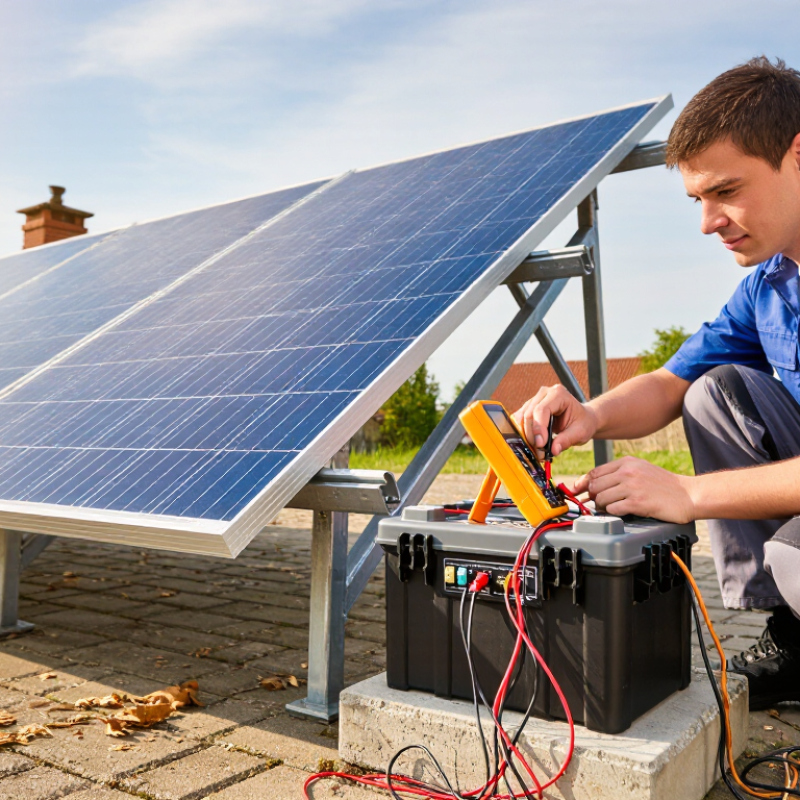
Why Is My Solar Panel Not Charging My Battery Properly?
How a Solar Panel and Battery Charging System Works
A solar charging system is a controlled chain, not a direct wire. Sunlight creates DC electricity in the panels. The charge controller then measures voltage, current, and battery temperature. Its MPPT function searches for the panel’s most productive operating point. It converts changing solar power into a safer charging profile. The battery management system may reduce current near full charge. Sometimes, it may stop charging completely.
The battery usually charges through bulk, absorption, and float stages. During bulk charging, available current rises quickly. Absorption charging holds a higher voltage while current slowly falls. Float charging maintains readiness without forcing excess energy inside. A cloudy afternoon can make the system appear faulty. Shading from one branch or a chimney can reduce output sharply. Loose terminals, undersized cables, and incorrect controller settings also waste energy.
Small details matter. A cool panel may produce more voltage, while a cold battery may accept less current. NREL’s 2024 Annual Technology Baseline reports typical lithium-ion storage round-trip efficiency near 85% to 90%. Some energy is therefore lost during charging and discharging. The IEA PVPS Trends 2024 report recorded more than 400 gigawatts of new solar capacity added globally in 2023. That growth makes system quality more important, but scale does not remove basic wiring errors. Measure panel voltage in sunlight, battery voltage at rest, and controller readings separately. Do not trust one screen. The simple diagram hides real operating conditions.
| System Area | What It Does | Normal Condition or Reading | Possible Problem | Recommended Check |
|---|---|---|---|---|
| Solar panel output | Converts sunlight into direct-current electricity. | Voltage is present in bright daylight and rises above the battery voltage when the system is operating correctly. | Shade, dirt, damaged cells, poor orientation, or low sunlight. | Inspect for shading and dirt; measure panel voltage according to the equipment instructions. |
| Solar charge controller | Regulates panel energy and protects the battery from overcharging and excessive discharge. | Charging status changes as the battery moves through bulk, absorption, and float stages. | Incorrect battery type, reversed connection, controller fault, or insufficient panel voltage. | Confirm battery chemistry, system voltage, polarity, error codes, and controller settings. |
| Battery voltage | Indicates the battery's electrical state, but voltage alone does not precisely measure capacity. | A nominal 12-volt lead-acid battery is often about 12.6–12.8 V at rest when full; charging voltage is higher. | Low voltage may indicate discharge, heavy loads, poor connections, or battery damage. | Allow the battery to rest without loads or charging, then measure voltage with a suitable meter. |
| Battery charging stages | Controls how current and voltage are applied during charging. | Bulk supplies higher current; absorption holds a target voltage; float maintains a full battery at a lower voltage. | The battery never reaches absorption or remains at a low state of charge. | Review charge history, available solar power, daily consumption, and programmed voltage limits. |
| Cable and connections | Carries current between the panel, controller, battery, and loads. | Connections are tight, clean, correctly fused, and show little voltage drop under load. | Loose terminals, corrosion, undersized cable, damaged insulation, or blown fuses. | Turn off power safely and inspect terminals, fuses, cable size, polarity, and signs of heating. |
| Energy balance | Compares solar energy supplied with energy consumed by connected loads. | Daily solar production exceeds daily usage and charging losses over the measurement period. | Large loads, short winter days, cloudy weather, or insufficient panel capacity. | Record panel production and load consumption for several days, including overnight use. |
| Temperature | Affects panel output, battery performance, and required charging voltage. | Performance changes with temperature; many controllers use temperature compensation for lead-acid batteries. | Extreme heat, cold, poor ventilation, or missing temperature compensation. | Keep the battery within its specified temperature range and follow the battery manufacturer's requirements. |
| Battery condition | Stores energy for use when sunlight is unavailable. | Accepts charging current and retains voltage after charging and resting. | Aged, sulfated, swollen, unbalanced, or internally damaged battery. | Check age, resting voltage, charging response, temperature, and capacity-test results. |
| Safety and protection | Limits damage from short circuits, overcurrent, reverse polarity, and unsafe battery conditions. | Fuses and disconnects are correctly rated, accessible, and operating normally. | Repeated fuse failure, hot cables, sparks, smoke, leakage, or unusual odor. | Stop the system, isolate the affected circuit, and seek qualified electrical assistance before reconnecting. |
The charge controller may be limiting current. Check shading, cable connections, battery settings, and charging stages.
Yes. A chimney shadow or covered panel corner can sharply reduce output. Even small shadows matter.
Measure panel voltage in sunlight, controller input, charging current, and battery voltage under load. Compare readings at midday.
An aging battery may show normal voltage while holding little energy. Test its capacity, not voltage alone.
Yes. Incorrect battery chemistry, voltage limits, or temperature settings may stop charging early. Review every setting carefully.
Clouds reduce sunlight, while dust and bird droppings reduce panel output. A cloudy afternoon can look like equipment failure.
Yes. Cold batteries may accept less current, while excessive heat can trigger protection. Panel and battery temperatures both matter.
Charging normally moves through bulk, absorption, and float stages. Current falls during absorption, then the system maintains readiness.
Typical lithium-ion storage may deliver roughly 85% to 90% round-trip efficiency. Some loss is normal, though wiring faults add more.
A loose terminal or undersized cable can waste energy. I might blame sunlight too quickly; inspect connections first.
Why is my solar panel not charging the battery properly? This problem can result from several issues within the charging system, including insufficient sunlight, dirty or damaged panels, loose wiring, incorrect connections, or a faulty charge controller. The battery itself may also be fully worn out, deeply discharged, improperly configured, or unable to accept and store energy. Understanding how the panel, charge controller, and battery work together is the first step toward finding the cause.
Start by checking the panel for shading, dirt, cracks, and secure connections, then inspect the wiring and controller for warning indicators or unusual readings. Test the battery voltage and confirm that its settings match the system requirements. Cleaning the panel, tightening connections, improving sunlight exposure, and resetting or replacing a faulty controller may restore normal charging. If charging remains weak or interrupted, the battery or another component may need replacement. Seek professional assistance when electrical testing is unsafe, readings are confusing, or internal damage is suspected.

 Lumina Light