China Top 10 Differences Between Integrated and Split Solar Lights?

Time:2026-05-03 Author:Isabella
0%

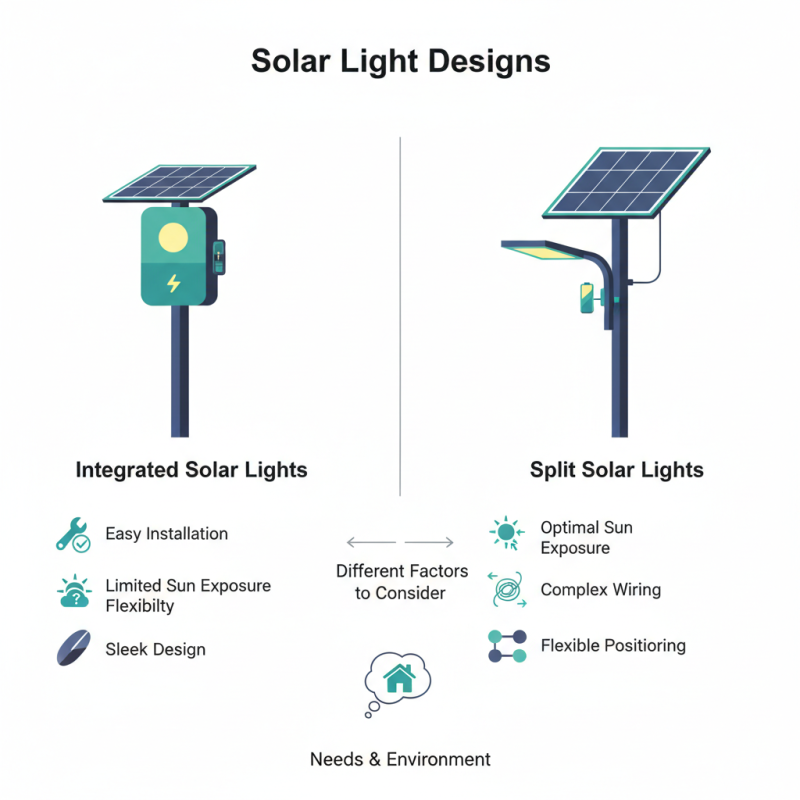
When exploring solar lighting options, many homeowners wonder, "What is the difference between integrated and split solar lights?" Understanding these differences can lead to an informed choice that fits your needs. Integrated solar lights feature all components in one unit, while split solar lights separate the solar panel from the light fixture. This distinction affects installation, efficiency, and overall performance.

Integrated solar lights offer a sleek design. However, they might struggle in areas with limited sunlight. On the other hand, split solar lights provide flexibility. You can position the solar panel for optimal sun exposure, ensuring better battery charging. However, this setup may require complicated wiring.

Ultimately, your decision should consider various factors. Reflect on your specific lighting needs and environmental conditions. While integrated solutions might appeal for their simplicity, split options could offer better performance in challenging environments. The choice might not be straightforward. Investigate your options carefully.
China Top 10 Differences Between Integrated and Split Solar Lights?

Integrated Solar Lights: Overview and Key Features

Integrated solar lights combine the solar panel, battery, and LED light into one unit. This design simplifies installation. Users appreciate how easily these lights can fit in various outdoor spaces. Typically, they require no wiring or external setups. With their self-contained system, maintenance needs are minimal. Some models even come with motion sensors for added convenience.

The key features of integrated solar lights include energy efficiency and durability. They harness solar energy during the day, reducing electricity costs. The materials used often withstand harsh weather conditions. However, there can be concerns about brightness and runtime. Some models may not shine as brightly after a cloudy day. This variability in performance can be frustrating, especially in areas with limited sunlight.

User experiences often highlight the importance of location. Proper placement significantly affects performance. While the integration of components offers convenience, it can limit flexibility. Users may want a brighter light or a different light color but are stuck with the integrated design. Reflecting on these aspects can help in making informed choices for outdoor lighting needs.

Split Solar Lights: Overview and Key Features

Split solar lights offer unique advantages in the renewable energy landscape. Unlike integrated solar lights, which have built-in solar panels and batteries, split solar lights separate these components. This design allows for more flexibility in installation. Users can place the solar panel in optimal sunlight while positioning the light fixture in shaded areas, maximizing efficiency.

Key features of split solar lights include adjustable brightness levels and motion detection. These features enhance energy efficiency while providing safety and convenience. According to industry reports, split solar lights can achieve up to 20% more energy output compared to their integrated counterparts when correctly installed. This statistic highlights the importance of positioning, making this option particularly appealing for varied environments.

Despite their benefits, some drawbacks exist. The separation of components can lead to installation complexity. Additionally, the higher initial cost may deter some users. Regular maintenance is also essential to ensure the solar panels remain clean and efficient. As technology advances, this segment of solar lighting continues to evolve, highlighting the need for ongoing evaluation and adaptation.

Comparison of Efficiency: Integrated vs. Split Solar Lights

When comparing integrated and split solar lights, efficiency is a crucial factor. Integrated solar lights combine the solar panel, battery, and LED in one unit. This design often makes them easier to install. However, there are limitations to their efficiency, especially in colder climates. The battery may not store energy effectively when temperatures drop.

On the other hand, split solar lights consist of separate components. The solar panel is positioned in an optimal location for sunlight absorption. This setup can lead to improved energy collection. However, installation is more complex. It may require additional wiring, which can be a drawback for some users. The separated components might also increase the potential for malfunction over time.

Both options have their advantages and disadvantages. Integrated units are convenient but may struggle in certain weather conditions. Split systems can offer better performance but involve more effort to set up. It's critical to assess personal needs carefully. Each choice carries potential issues that may require a thoughtful approach.

Installation Differences Between Integrated and Split Solar Lights

When it comes to solar lights, installation is a critical factor that can greatly affect performance. Integrated solar lights have everything combined into one unit. This means setup is usually quicker; you just mount it and turn it on. They often come with built-in solar panels, batteries, and LED lights. According to a recent industry report, nearly 70% of users prefer this design for ease and time-saving benefits.

On the other hand, split solar lights separate the solar panel from the lighting unit. This allows for greater flexibility in installation. You can position the solar panel in a location that gets plenty of sunlight while placing the light where it's needed. However, this added versatility can lead to complex setups. Many users report difficulty in connecting cables and ensuring optimal angles for both the panel and the light. The need for additional accessories might also increase the total installation cost, making it less attractive for some.

An industry survey found that 40% of users encountered issues with wiring during installation. Many didn’t anticipate the challenges of split systems. Despite the potential benefits of split designs, installation can be daunting for the average consumer. It's essential to weigh ease of installation against the advantages of flexibility and efficiency.

Cost Analysis: Long-Term Savings of Integrated vs. Split Solar Lights

When considering solar lighting solutions, integrated and split models differ significantly in cost and efficiency. Integrated solar lights combine the solar panel, battery, and LED lamp into a single unit. Meanwhile, split solar lights separate these components. This design offers flexibility but often incurs higher installation costs. A report from the Solar Energy Industry Association indicates that integrated models can save up to 30% in installation over the long term due to less complexity.

Long-term savings also emerge when examining maintenance and repairs. Integrated systems generally require less upkeep. The National Renewable Energy Laboratory found that integrated models last an average of 25 years with minimal maintenance. In contrast, split systems can face challenges. Battery replacements and panel repairs may add to overall costs, leading to financial burdens for users over time.

Moreover, the upfront cost appears higher for integrated models. However, the long lifespan and lower maintenance fees can lead to significant savings. It's crucial to assess the local climate and installation conditions before making a decision. Reflecting on these factors ensures a well-informed choice.

China Top 10 Differences Between Integrated and Split Solar Lights

Criteria Integrated Solar Lights Split Solar Lights
Initial Cost Lower Higher
Installation Complexity Easy Moderate
Maintenance Requirements Low Higher
Battery Life Shorter Longer
Light Output Moderate Higher
Durability Good Excellent
Aesthetic Appeal Sleek Versatile
Adaptability to Environment Limited Highly Adaptable
Long-Term Savings Moderate Higher
Overall Performance Average Superior

FAQS

: What are split solar lights?

: Split solar lights separate solar panels from the light fixture. This allows better placement for sunlight exposure.

What benefits do split solar lights provide?

They offer adjustable brightness, motion detection, and can produce up to 20% more energy when installed correctly.

Are split solar lights harder to install?

Yes, split solar lights can be complex to install due to separate components and additional wiring requirements.

How do integrated solar lights differ from split models?

Integrated lights combine all parts in one unit, making installation easier but may underperform in colder temperatures.

What are the maintenance needs for these lights?

Split solar lights require regular maintenance. Cleaning solar panels is essential for maintaining performance.

Do integrated solar lights have lower overall costs?

Yes, integrated models can mean lower installation and maintenance costs, leading to savings over time.

Can split solar lights malfunction more easily?

Yes, the separation of components may increase the risk of malfunction as more parts are involved.

How do environmental conditions impact performance?

Integrated lights can struggle in cold weather, while split systems thrive by optimizing panel placement for sunlight.

What should users consider before choosing?

Reflect on local climate and personal installation skills to make a thoughtful choice among solar lighting options.

Is installation complexity a significant drawback?

Yes, the complexity can be a barrier for those unfamiliar with wiring and setup, requiring extra effort.

Conclusion

The article "China Top 10 Differences Between Integrated and Split Solar Lights" explores the distinction between these two popular solar lighting options. Integrated solar lights feature a compact design where the solar panel, light source, and battery are combined into one unit, making them easy to install and aesthetically pleasing. In contrast, split solar lights have separate components, allowing for more flexibility in installation and potentially higher efficiency, as the solar panel can be placed in an optimal location for sunlight exposure.

When examining the question, "What is the difference between integrated and split solar lights?", the article provides insights into their efficiency, installation processes, and cost implications. Integrated lights tend to have lower upfront costs and simpler installations, while split lights may offer long-term savings due to higher energy conversion rates and replaceable components. Ultimately, the choice between these two types of solar lights hinges on user preferences for design, installation ease, and cost-effectiveness over time.

Isabella

Isabella

Isabella is a dedicated marketing professional with a sharp focus on driving brand growth and engagement through strategic content creation. With an extensive background in digital marketing, she combines her passion for storytelling with her keen understanding of industry trends to deliver......