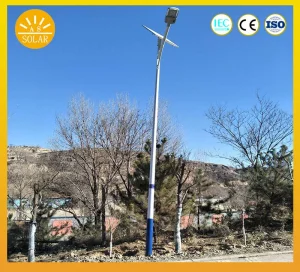
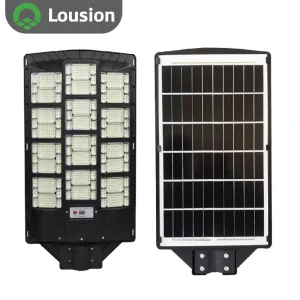
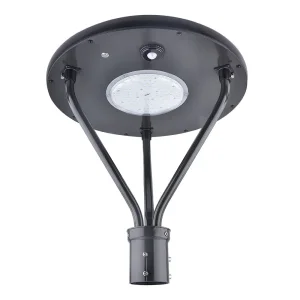
Explore our premium grade integrated, split-type, and intelligent wireless solar street lights engineered for commercial, municipal, and industrial applications.
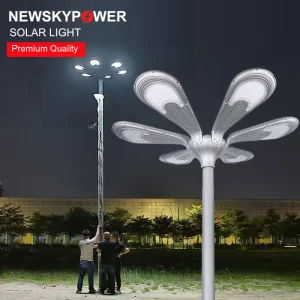
The paradigm shift in smart city development and remote grid modernization.
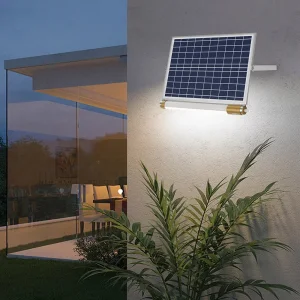
Traditional outdoor lighting installations require heavy trenching, copper wiring, and power distribution points. Wireless solar street lights eliminate grid dependence entirely, cutting overall CAPEX by up to 60% on typical municipal roads.
Equipped with intelligent communication protocols (LoRa, NB-IoT, Zigbee), wireless street lights allow municipal utility operators to manage schedules, track energy conversion efficiency, monitor battery levels, and diagnose component errors in real-time.
Wireless solar street lights remain fully functional during grid outages, natural disasters, and extreme weather events, ensuring that critical pathways, public spaces, and security corridors stay lit even when the local power grid fails.
Analyzing vertical integration, material access, and technological optimization at scale.
The global competitiveness of China's solar street lighting sector is built on an unparalleled manufacturing ecosystem. Chinese factories process over 75% of the world's silicon wafers and control the primary manufacturing channels for high-density lithium iron phosphate (LiFePO4) energy storage cells. This enables Chinese manufacturers to implement rigorous cost control measures while rapidly incorporating advanced design iterations like monocrystalline silicon photovoltaic cells with over 22.5% photoelectric conversion efficiency.
Furthermore, local supply chain clusters in Guangdong province (particularly Foshan and Shenzhen) allow component manufacturers—ranging from high-accuracy aluminum die-casting plants to precision multi-chip SMD LED designers—to cooperate seamlessly. This high-density concentration dramatically reduces transport logistics costs, minimizes lead times for custom tooling, and streamlines standard quality assurance procedures across the supply chain.
For international buyers and procurement officers, buying directly from a vertically integrated manufacturer in China translates to strict quality controls, standardized pricing structures, certified laboratory testing processes, and direct communication channels for custom structural or electronic engineering requirements.
A trusted global leader in photovoltaic R&D and clean energy storage solutions.
Foshan Lumina Light Co., Ltd., founded in 2021, is a forward-thinking and innovative company specializing in photovoltaic technology. We focus on the research and development of integrated solar lighting and energy storage systems, as well as the manufacturing and global distribution of solar lamps and energy storage batteries. Since our establishment, we have adhered to the core philosophy of “Technology-Driven Excellence, Quality-Rooted Trust,” incorporating intuitive, user-friendly designs, low-maintenance convenience, and long-term reliability into every stage of R&D and production.
At Foshan Lumina Light, we pride ourselves on providing high-performance solar products and tailored power solutions to strategic partners in over 100 countries and regions worldwide. Our commitment to global standards of quality is reflected in our active participation in key international certification systems, ensuring that our products meet the highest benchmarks. As a result, our range of solar products has received full international certifications, including CQC, CE, ROHS, IEC, TUV, and SGS, giving our customers confidence in our products and facilitating smooth market access in diverse regions.
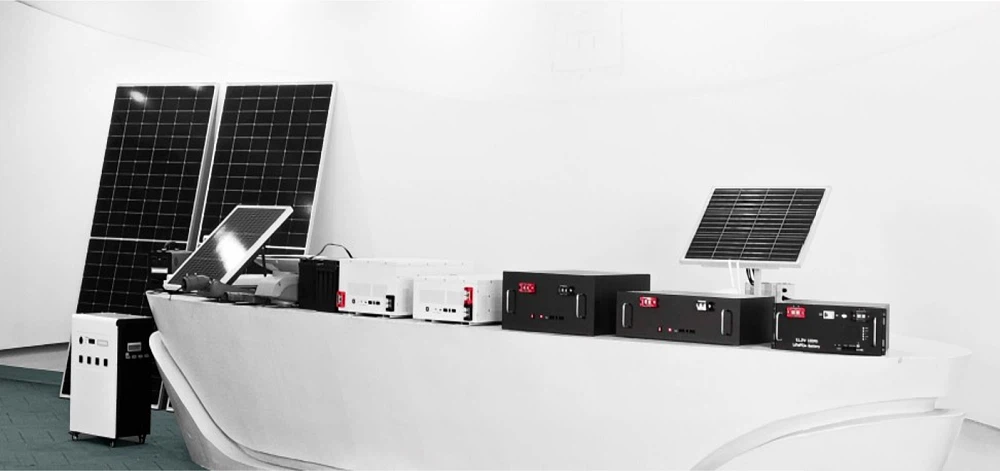
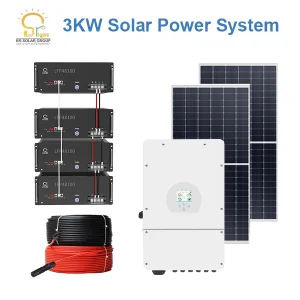
Foshan Lumina Light boasts a diverse range of cutting-edge solar solutions, designed to meet the energy needs of residential, commercial, and municipal sectors. Our product portfolio includes integrated solar street lamps, split-type solar street lamps, portable solar home power systems, and high-capacity lithium energy storage batteries. These solutions are carefully engineered for maximum performance, ease of installation, and hassle-free maintenance.
Our solar street lamps are designed with a reinforced, weather-resistant shell, making them highly effective for deployment in high-humidity rural and urban areas. These lamps are built to perform under extreme weather conditions and provide long-lasting, reliable illumination. Whether in remote villages, local roads, or urban streets, Foshan Lumina Light solar lamps offer consistent, uninterrupted service.
Our solar home power systems provide an efficient, off-grid solution for households looking to reduce their carbon footprint and energy costs. Additionally, our energy storage batteries allow for enhanced energy management, enabling users to store solar energy during the day for use at night or during cloudy periods.
How wireless solar illumination structures adapt to challenging global microclimates.
In regions like the Middle East and North Africa, solar streetlights face extreme ambient temperatures exceeding 50°C. Standard batteries fail quickly under these conditions. Foshan Lumina Light utilizes specialized LiFePO4 battery formulations coupled with intelligent temperature-managed MPPT controllers to maintain regular operational lifespans without thermal runaway.
Sea mist contains suspended salt crystals that accelerate the corrosion of standard aluminum and iron fixtures. Our high-humidity, marine-grade structures use double-anodized powder-coated die-cast aluminum housings rated at IP66 / IP68 protection levels to guarantee zero internal moisture intrusion and maintain structural integrity over a 10-year lifespan.
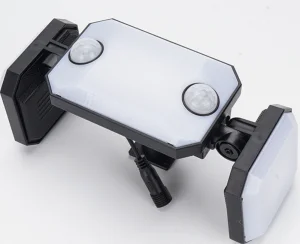
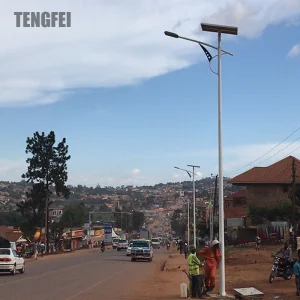
In developing markets, vast arterial networks remain unlit due to grid expansion delays. Split-type solar lights with high-lumen, multi-directional light distributions provide reliable safety zones. Advanced PIR or microwave motion sensors dim the systems during zero-traffic periods, extending continuous battery autonomy to over 5 consecutive rainy days.
The convergence of smart grids, adaptive AI, and micro-generation.
Modern charge controllers are moving away from fixed timer cycles. AI-powered algorithms now process local weather history and real-time charging rates to dynamically adjust the LED current draw throughout the night, ensuring 100% illumination availability even during unprecedented storm seasons.
By moving to N-type silicon cell architecture, newer generation panels maintain a much lower degradation rate over time and exhibit improved performance in low diffuse light, resulting in a higher net energy harvest in northern latitudes.
Street light poles are transitioning into physical infrastructure hubs. Modern setups are built to house environmental sensors, public Wi-Fi hardware, and IP surveillance systems powered directly by the light's internal battery reserves, creating a fully integrated smart grid node.
As sustainability criteria tighten worldwide, manufacturers are shifting focus toward end-of-life battery recycling. Our modular battery packs are designed to allow simple cell replacement, extending the useful lifetime of the light assembly and lowering long-term maintenance costs.
Essential checklist for municipal developers, EPC contractors, and industrial purchasing agents.
Ensure that the vendor specifies battery life in cycles at a defined Depth of Discharge (DoD). High-quality LiFePO4 cells should exceed 2,000 to 3,000 charge/discharge cycles at 80% DoD before capacity drops below 80% of nominal rating.
Wattage ratings can be misleading. Buyers should evaluate Luminous Efficacy (measured in Lumens per Watt, or lm/W). Premium fixtures achieve over 160-200 lm/W through high-performance LED arrays, allowing lower battery capacity requirements while providing identical light coverage.
Verify whether the charge controller uses PWM (Pulse Width Modulation) or MPPT (Maximum Power Point Tracking) technology. MPPT controllers improve energy capture by up to 30%, which is critical in northern latitudes or areas with frequent cloud cover.
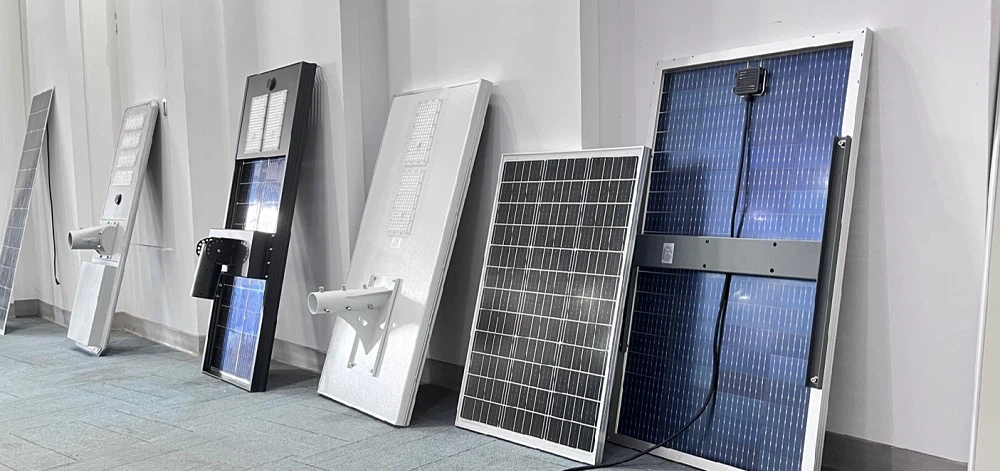
Innovation is at the heart of everything we do at Foshan Lumina Light. In addition to our off-the-shelf products, we also offer ODM & OEM services, allowing clients to customize solutions to suit their specific needs. We provide free consultations to first-time partners, helping them build their own distinct brand identity in the solar energy market. This partnership approach has enabled us to work closely with global clients to bring innovative, sustainable products to the market.
We are committed to advancing the development of green energy solutions and promoting the adoption of solar power as a clean, renewable resource for the future. Foshan Lumina Light believes in empowering communities and businesses with sustainable energy solutions that not only improve the quality of life but also contribute to a cleaner planet. Our mission is simple but profound: “Clean the World with Green Energy.”
We are proud to partner with customers and collaborators around the world to create brighter, more sustainable communities through the power of solar energy.
Expert answers regarding design parameters, battery lifespans, and operational reliability.
A: Standard solar street lights are configured with a backup margin, typically between 3 to 5 rainy days. By sizing the PV panel and battery capacity relative to the local geographic location, and incorporating smart dimming algorithms that reduce illumination output during periods of low battery storage, the system can maintain lighting performance without blacking out.
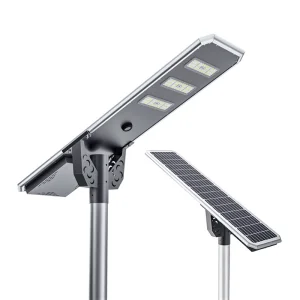
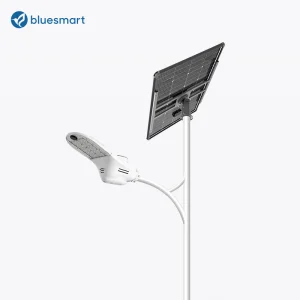
A: All-in-One systems integrate the PV panel, battery, and LED light engine into a single housing, making installation quick and simple. Split-Type systems separate the solar panel, allowing it to be oriented independently toward the sun, which is ideal for shading conditions or projects requiring high solar panel surfaces and high luminous output.
A: High temperatures can shorten battery service life, while sub-zero temperatures reduce battery discharge efficiency. For cold climates, we utilize insulated battery compartments and advanced low-temperature LiFePO4 cells that can charge at temperatures down to -20°C, helping prevent winter performance degradation.
A: Thanks to their wireless, self-powered design, maintenance requirements are minimal. The primary task is periodic inspection of the solar panels to remove dust, dirt, or snow accumulation that can block sunlight, along with monitoring battery capacity metrics via the central management console.
A: By connecting each light fixture to an IoT gateway via LoRa or NB-IoT, maintenance teams can monitor operating data, adjust dimming profiles remotely, and receive automatic fault alerts. This reduces inspection costs and improves municipal response times.
Optimized solar path fixtures, energy systems, and high-wattage street lights engineered for global markets.
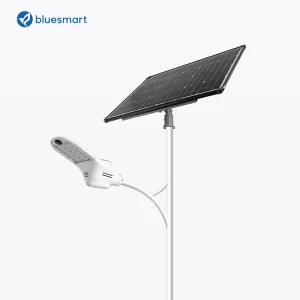
 Lumina Light