Industrial-grade, high-efficiency solar lighting systems certified for municipal, industrial, and heavy-duty private road networks.
Establishing benchmarks in photovoltaic innovation, regulatory compliance, and off-grid durability.
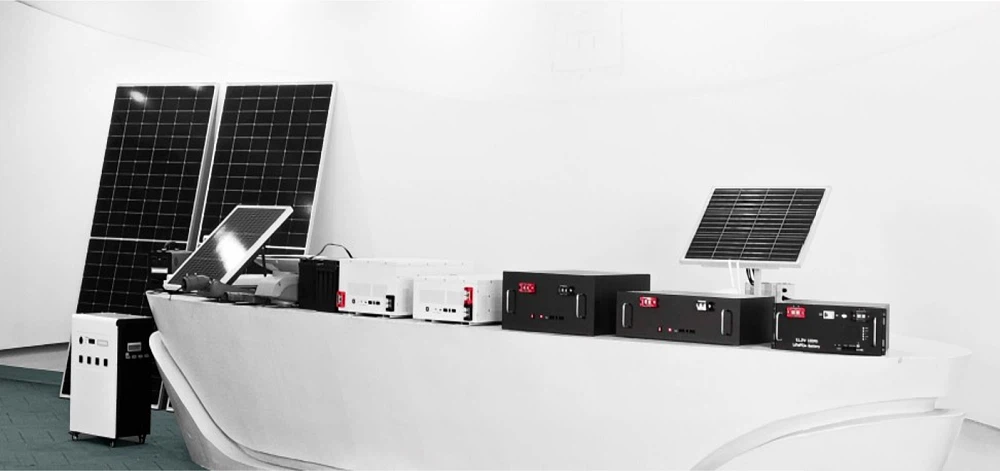
Founded in 2021, Foshan Lumina Light Co., Ltd. is a forward-thinking and innovative company specializing in photovoltaic technology. We focus on the research and development of integrated solar lighting and energy storage systems, as well as the manufacturing and global distribution of solar lamps and energy storage batteries. Since our establishment, we have adhered to the core philosophy of “Technology-Driven Excellence, Quality-Rooted Trust,” incorporating intuitive, user-friendly designs, low-maintenance convenience, and long-term reliability into every stage of R&D and production.
At Foshan Lumina Light, we pride ourselves on providing high-performance solar products and tailored power solutions to strategic partners in over 100 countries and regions worldwide. Our commitment to global standards of quality is reflected in our active participation in key international certification systems, ensuring that our products meet the highest benchmarks. As a result, our range of solar products has received full international certifications, including CQC, CE, ROHS, IEC, TUV, and SGS, giving our customers confidence in our products and facilitating smooth market access in diverse regions.
Uncovering the macroeconomic drivers, regulatory landscapes, and engineering parameters guiding global corporate acquisitions.
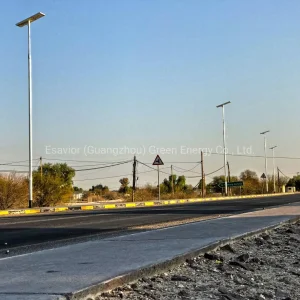
Private road networks represent a substantial subset of corporate and industrial land holdings globally. From logistics pathways in modern smart hubs, private thoroughfares within heavy-manufacturing estates, mine haul routes, to exclusive resort complexes and agricultural logistics lanes—the requirement for reliable safety illumination is paramount. However, trenching traditional grid infrastructure across non-public, long-distance corridors involves massive CAPEX, environmental disruptions, and prolonged municipal approval delays.
Consequently, global EPCs (Engineering, Procurement, and Construction contractors), industrial park developers, and commercial entities are looking to self-sufficient off-grid solutions. The requirements can be categorized into four primary procurement pillars:
Elimination of civil engineering costs associated with deep trenching, copper cable laying, and transformer installations. Off-grid deployment translates to an immediate savings of up to 60-70% on initial setups.
Harnessing persistent solar energy ensures that long-term utility bills are entirely non-existent. Smart LED systems maximize solar capture and distribute it dynamically over a 15-year lifecycle.
Alignment with strict carbon reduction mandates (such as Europe’s CSRD, US SEC climate disclosure rules, and global ESG benchmarks). Every installed pole contributes directly to Scope 1 & 2 emissions reduction profiles.
Private facilities require uninterrupted operations. Unlike grid lighting, which falls victim to grid brownouts or blackouts, decentralized solar lighting functions completely independently during seismic or weather crises.
Analyzing the functional divisions of modern photovoltaic street lamps and matching layouts to specific industrial applications.
Modern commercial private roads call for highly specific light distribution profiles to guarantee safety, optimize visibility, and prevent light pollution. Under the guidelines of international bodies, lighting configurations must be tailored to road geometry, vehicle speed, and regional ambient weather conditions. The two main architectures employed are:
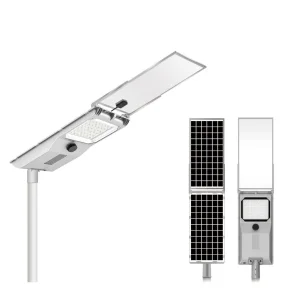
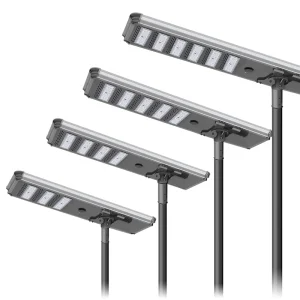
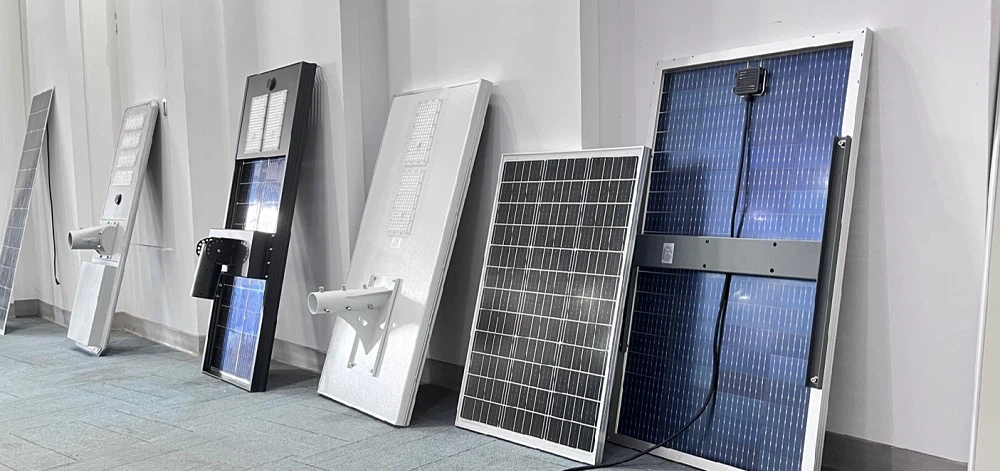
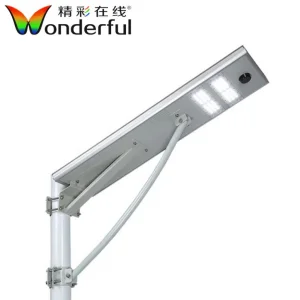
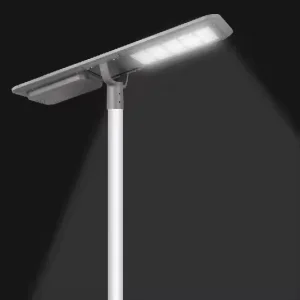
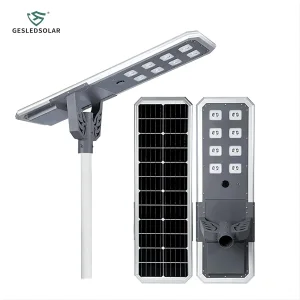
Designed for low-wind-profile locations and rapid installation. These systems pack the monocrystalline silicon panel, the LiFePO4 battery pack, and the MPPT controller directly into a unified structural shell. Ideal for secondary pathways, pedestrian walkways, and industrial park service roads.
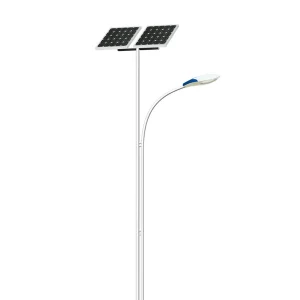
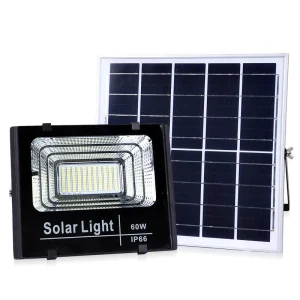
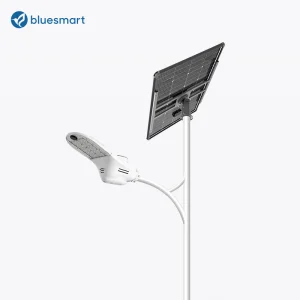
Engineered for high-latitude sites or regions with restricted direct sunlight. This setup separates the solar panel from the main battery and LED casing, allowing operators to adjust the panel angle towards the sun independently while orienting the light distribution directly downwards. Highly recommended for heavy commercial transport lanes.
Fitted with cellular or mesh transmission modules (LoRa, Zigbee, NB-IoT). Operators can monitor battery states, charge/discharge metrics, dimming curves, and sensor alerts via a centralized web dashboard, minimizing maintenance overhead across vast private properties.
| Specification Metric | Industrial High-Power (Primary Road) | Commercial Mid-Range (Secondary Road) | Urban Garden & Pathway (Residential) |
|---|---|---|---|
| Nominal Output Wattage | 150W - 300W | 60W - 120W | 30W - 50W |
| Luminous Efficacy | 170 - 210 lm/W | 160 - 180 lm/W | 140 - 160 lm/W |
| Solar Panel Type | Monocrystalline Silicon (>22% Efficiency) | Monocrystalline Silicon (>21% Efficiency) | Highly Durable Mono/Poly-Silicon |
| Battery Chemistry & Life | LiFePO4 (>3000 Cycles @ 80% DOD) | LiFePO4 (>2500 Cycles @ 80% DOD) | LiFePO4 (>2000 Cycles @ 80% DOD) |
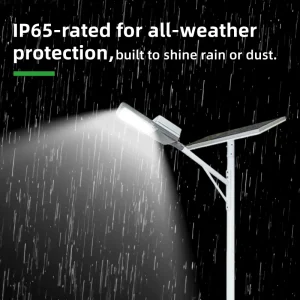
| Ingress Protection | IP66 / IP67 Rated | IP65 / IP66 Rated | IP65 Rated |
| Smart Control Capability | IoT, Microwave Sensor, Time Control | PIR Sensor, Dusk-to-Dawn Automated | PIR Sensor, Photocell Autonomous |
An in-depth chemical and electronic exploration of how next-generation solar street lights endure extreme conditions.
The core components of any high-yield solar lighting system include the photovoltaic cell, the battery storage medium, and the electronic controller. In the past decade, technological evolution in these fields has moved from low-density Lead-Acid batteries to Lithium-based solutions, and from low-efficacy LEDs to state-of-the-art semiconductor packages.
Modern solar panels manufactured by Foshan Lumina Light utilize high-purity monocrystalline silicon wafers. The layout of the cells utilizes PERC (Passivated Emitter and Rear Cell) technology, allowing for conversion efficiencies in excess of 22%. In high-humidity coastal and industrial zones, these panels are protected by dual-sided anti-reflective tempered glass and marine-grade anodized aluminum frames to resist salt spray corrosion and wind loads up to 60 m/s.
Lithium Iron Phosphate (LiFePO4) is the chemistry of choice for high-reliability solar road lighting. Compared to ternary lithium (NMC) batteries, LiFePO4 offers exceptional thermal stability and safety, eliminating risks of thermal runaway. Furthermore, they support deeper Depth of Discharge (DOD) without structural degradation. In standard environments, the battery operates reliably for 8 to 10 years, dramatically reducing B2B lifecycle costs.
A street light is only as good as its brains. Traditional Pulse Width Modulation (PWM) controllers waste substantial energy during cloudy seasons. Foshan Lumina Light systems integrate proprietary Maximum Power Point Tracking (MPPT) controllers. These modules scan the current-voltage curve of the PV panel up to 100 times per second, ensuring the maximum possible wattage is extracted and directed to the LiFePO4 storage core, even under heavy shade or debris accumulation.
Over the next five years, the industry is transitioning toward Bifacial Solar Panels that harvest albedo light reflected from the pavement, and AI-Driven Adaptive Dimming Protocols. These protocols analyze historical weather patterns of local geographic coordinates to optimize dimming cycles, ensuring that the light operates even through extended 10-day cloudy periods.
Where are private road solar systems deployed? Analyzing regional demand and operational environments.
Global demand profiles differ drastically according to geographic coordinates. In northern climates (Northern Europe, Canada, Northern USA), the main challenges are sub-zero temperature battery operation and limited winter daylight hours. Systems deployed here require insulated battery enclosures with integrated self-heating elements that tap residual charging current to keep the LiFePO4 cell temperature above 0°C.
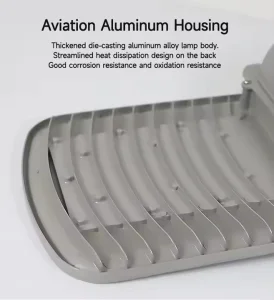
Conversely, in the Middle East, North Africa, and parts of Australia, the challenge is ambient temperatures soaring past 50°C. In these regions, passive heat dissipation fins on the luminaire head and thermal insulation barriers inside the battery housing are mandatory to prevent premature capacity degradation. Foshan Lumina Light’s rugged weather-resistant shells are specifically engineered to thrive in high-humidity rural and urban areas alike, ensuring continuous operation under the most punishing ambient circumstances.
Designed for sub-zero installations, using specialized low-temperature battery chemistry combined with steep panel angles to shed snow and frost automatically.
Utilizes advanced heat dissipation paths, over-temperature protection firmware, and UV-stabilized poly-carbonate optics to prevent yellowing and degradation.
Designed to resist saline fog, incorporating marine-grade 316 stainless-steel components and specialized anti-corrosive powder coatings.
Navigating the complex certification frameworks and custom design parameters required for international tenders.
Deploying lighting along critical transit corridors requires compliance with strict safety and performance specifications. At Foshan Lumina Light, we align our product development and manufacturing pipelines with the most respected international verification standards. This allows our products to clear custom checkpoints smoothly and helps project developers pass local municipal inspections without delays.
Our catalog is fully certified under CE (Conformité Européenne), RoHS (restriction of hazardous substances), CQC (China Quality Certification), IEC (International Electrotechnical Commission), TUV, and SGS standards. This guarantees electromagnetic compatibility, low toxic footprint, and long-term electrical safety.
We provide full-spectrum OEM and ODM services. From customized pole mounts, tailored luminaire colors, localized bracket geometries, to modified battery capacities tailored for low-solar geographic regions. We also provide free consultations to first-time B2B partners, helping them build their own distinct brand identity.
In accordance with our global mission "Clean the World with Green Energy," we implement an eco-friendly manufacturing cycle, using recyclable aluminum housings and planning for direct battery recycling channels through regional logistics hubs.
Addressing the critical installation, operating, and structural questions raised by procurement managers.
Engineered for maximum durability, structural flexibility, and zero-grid utility cost.

 Lumina Light