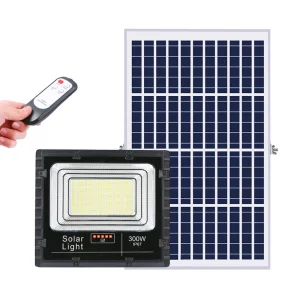
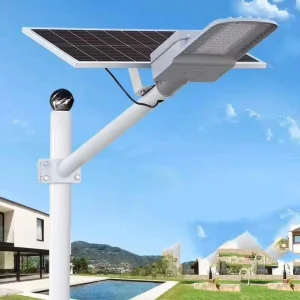
Specifically pre-configured configurations engineered to perform in high-temperature, high-dust environments typical of West African logistics and municipal routes.
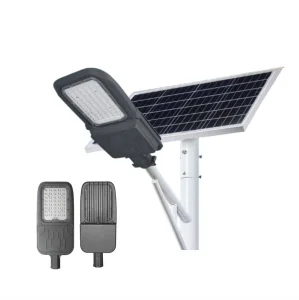
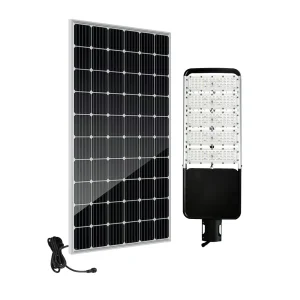
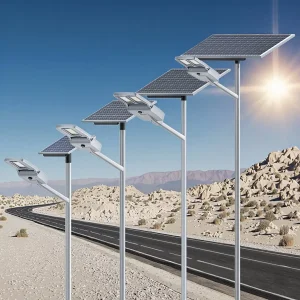
Understanding energy challenges and grid dynamics across Bamako, Kayes, Sikasso, and Mopti.
Mali, situated in the heart of the Sahel region, possesses some of the world's highest solar irradiation resources (averaging between 5 to 7 kWh/m²/day). Yet, the country faces persistent electrical infrastructure challenges. The national electric utility, Energie du Mali (EDM-SA), struggles to supply reliable grid power to municipal centers and rural zones alike, leaving municipalities, mining sites, and private developments exposed to blackouts and skyrocketing diesel-generation costs.
In response, the Malian government has enacted the National Renewable Energy Strategy, prioritizing decentralized solar systems to offset fossil-fuel reliance. For industrial, municipal, and commercial developers, traditional grid-connected streetlights are no longer economically viable due to the prohibitive capital costs of trenching, cabling, and substation setup. Off-grid solar installations have transitioned from an environmental choice to a critical operational requirement.
However, Mali’s climate is uniquely punishing. The Sahelian environment brings extreme ambient temperatures exceeding 45°C during the hot season, alongside the seasonal Harmattan winds that carpet solar arrays with fine Saharan dust. Standard integrated lighting components fail prematurely under these harsh conditions. This has catalyzed a major shift toward All-in-Two (AIT) solar street light architecture as the default engineering standard for West African developers.
A comparative engineering analysis of performance, thermal management, and theft prevention.
Choosing the correct design architecture determines whether a municipal solar project survives past its second year or fails during its first Sahelian summer. Below is a rigorous comparison of solar street light architectures under Malian environmental conditions.
| Performance Parameter | All-in-One (Integrated) | Traditional Split System | All-in-Two (AIT) System |
|---|---|---|---|
| Solar Orientation & Tilt | Fixed. The PV panel tilt matches the lamp bracket angle. Poor alignment under Mali's latitude. | Fully adjustable. Panel can be directed to true South at an optimized 12°-15° angle. | Fully adjustable. The PV panel pivots independently of the LED luminaire, maximizing daily yield. |
| Thermal Protection | Poor. Battery is located directly beneath the scorching PV panel, causing heat-induced degradation. | Good (if buried deep underground). However, underground setups are prone to seasonal flooding. | Excellent. The battery is housed inside the luminaire casting, shaded by the PV panel bracket. |
| Installation Speed | Fast (10-15 minutes). No wiring required. | Slow. Requires underground excavation, conduit placement, battery boxes, and external wiring. | Fast (15-20 minutes). Slide onto pole, orient the panel, and plug in the pre-molded MC4 connector. |
| Anti-Theft Protection | Moderate. Entire unit is high on the pole, but easy to strip off if climbed. | Extremely vulnerable. Buried lead-acid or lithium batteries are frequent targets for theft. | High. Battery, LED engine, and controller are sealed in a secure casing high on the pole. |
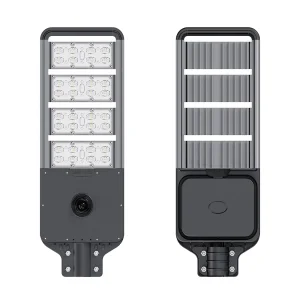
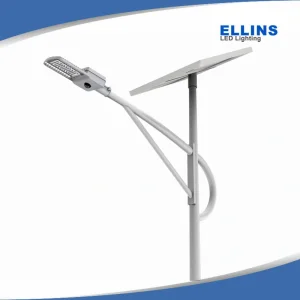
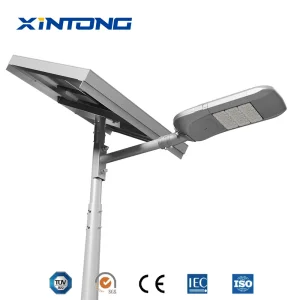
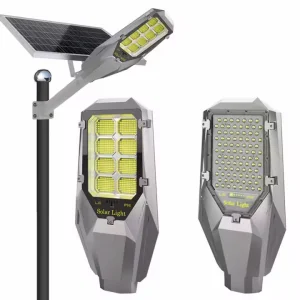
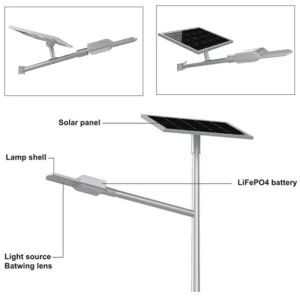
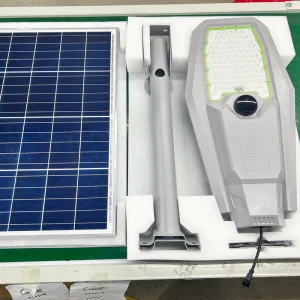
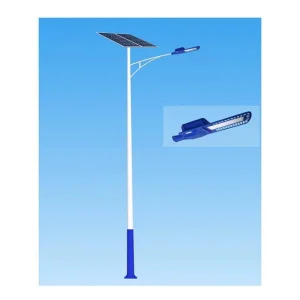
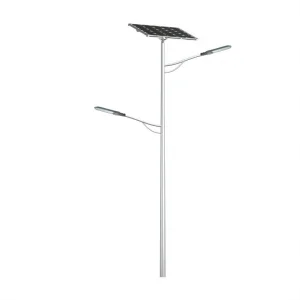
The All-in-Two design separates the PV panel from the combined battery-controller-LED fixture. This allows projects in Mali to tilt the solar panels independently to the ideal angle (maximizing solar radiation capture throughout the dry season) while keeping the battery securely protected from the sun’s direct rays. It eliminates costly civil works like trenching, concrete battery box construction, and cabling, which can represent up to 60% of total project costs in remote areas of Mali.
How our customized configurations withstand Mali's severe Sahelian weather patterns.
Standard polycrystalline modules lose efficiency rapidly under high temperatures. We source monocrystalline solar cells with a low temperature coefficient, delivering a 21.5%+ conversion rate even when temperatures exceed 40°C.
Using premium Lithium Iron Phosphate (LiFePO4) chemistry with an active Battery Management System (BMS). Capable of operating up to 60°C and supporting over 3,000 charge cycles at 80% Depth of Discharge.
Designed with marine-grade aluminum housing, outdoor-rated anti-UV paint, and silicone gasket seals to keep out Saharan dust during Harmattan storms and heavy rain during the Sahelian wet season.
Pioneering photovoltaic technology with international standards and direct factory logistics.
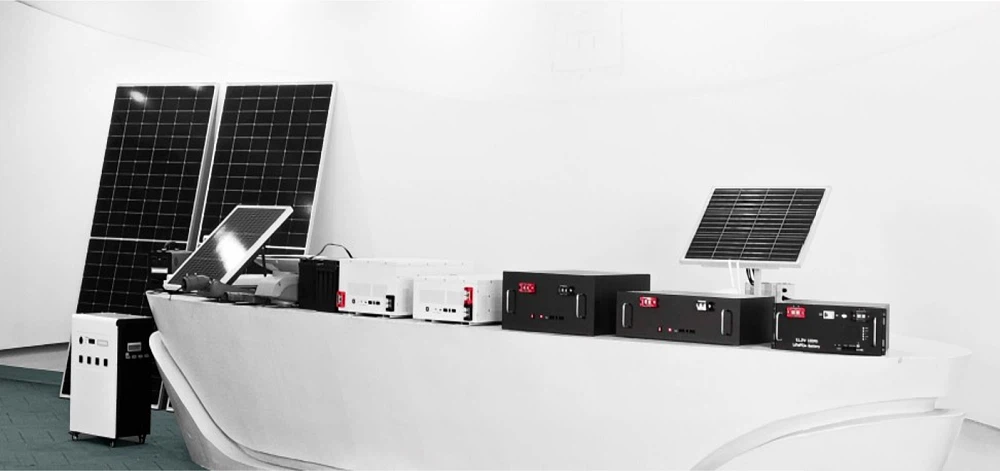
Founded in 2021, Foshan Lumina Light Co., Ltd. is a forward-thinking and innovative company specializing in photovoltaic technology. We focus on the research and development of integrated solar lighting and energy storage systems, as well as the manufacturing and global distribution of solar lamps and energy storage batteries. Since our establishment, we have adhered to the core philosophy of “Technology-Driven Excellence, Quality-Rooted Trust”, incorporating intuitive, user-friendly designs, low-maintenance convenience, and long-term reliability into every stage of R&D and production.
We pride ourselves on providing high-performance solar products and tailored power solutions to strategic partners in over 100 countries and regions worldwide. Our commitment to global standards of quality is reflected in our active participation in key international certification systems, ensuring that our products meet the highest benchmarks. As a result, our range of solar products has received full international certifications, including CQC, CE, ROHS, IEC, TUV, and SGS, giving our customers confidence in our products and facilitating smooth market access in diverse regions.
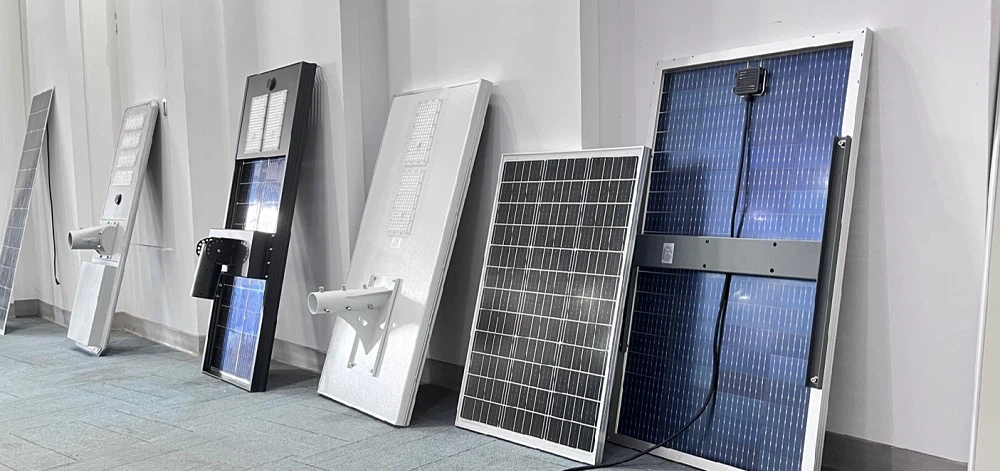
Foshan Lumina Light boasts a diverse range of cutting-edge solar solutions, designed to meet the energy needs of residential, commercial, and municipal sectors. Our product portfolio includes integrated solar street lamps, split-type solar street lamps, portable solar home power systems, and high-capacity lithium energy storage batteries. These solutions are carefully engineered for maximum performance, ease of installation, and hassle-free maintenance.
How we manage the supply chain from our factories in Foshan directly to sites across Mali.
Procuring solar street lights for municipal tenders in Mali requires navigating complex logistics and quality control protocols. Foshan Lumina Light manages the complete shipping chain to ensure safe transit, customs compliance, and trouble-free delivery.
As Mali is landlocked, we route cargo through the Port of Dakar (Senegal) or the Port of Abidjan (Côte d'Ivoire), utilizing trusted inland road freight corridors directly to Bamako.
We provide full documentation for Malian customs, including packing lists, Certificates of Origin, and SGS or Bureau Veritas pre-shipment inspection reports to streamline import clearance.
Every shipment is accompanied by detailed CAD drawings, electrical schematics, step-by-step video installation guides, and direct remote engineering support for your local contractors.
How our clients leverage All-in-Two systems to power critical infrastructure across the country.
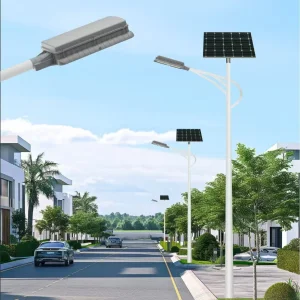
In high-density urban areas like Bamako, reliable grid power is scarce. Our high-power 100W and 200W All-in-Two solar street lights provide continuous, high-intensity roadway illumination without taxing the local grid, improving public safety and cutting municipal operating costs.
Mali's gold mining sectors operate in remote, off-grid areas. Security fencing, access roads, and staging yards must remain illuminated 24/7. Our heavy-duty IP66 lights run completely independently of fuel deliveries, lowering diesel costs and increasing site safety.
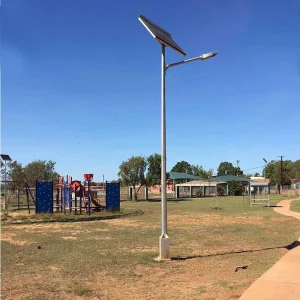
Lighting public squares, health clinics, and markets in rural Mali fosters community activity after dark. By mounting the battery high off the ground, our All-in-Two systems prevent tampering and vandalism in remote locations.
Browse our complete range of certified systems. Custom OEM modifications are available for bulk commercial and municipal orders.
Direct, technical answers regarding engineering design, logistics routes, and warranty services for Mali solar lighting projects.
 Lumina Light